
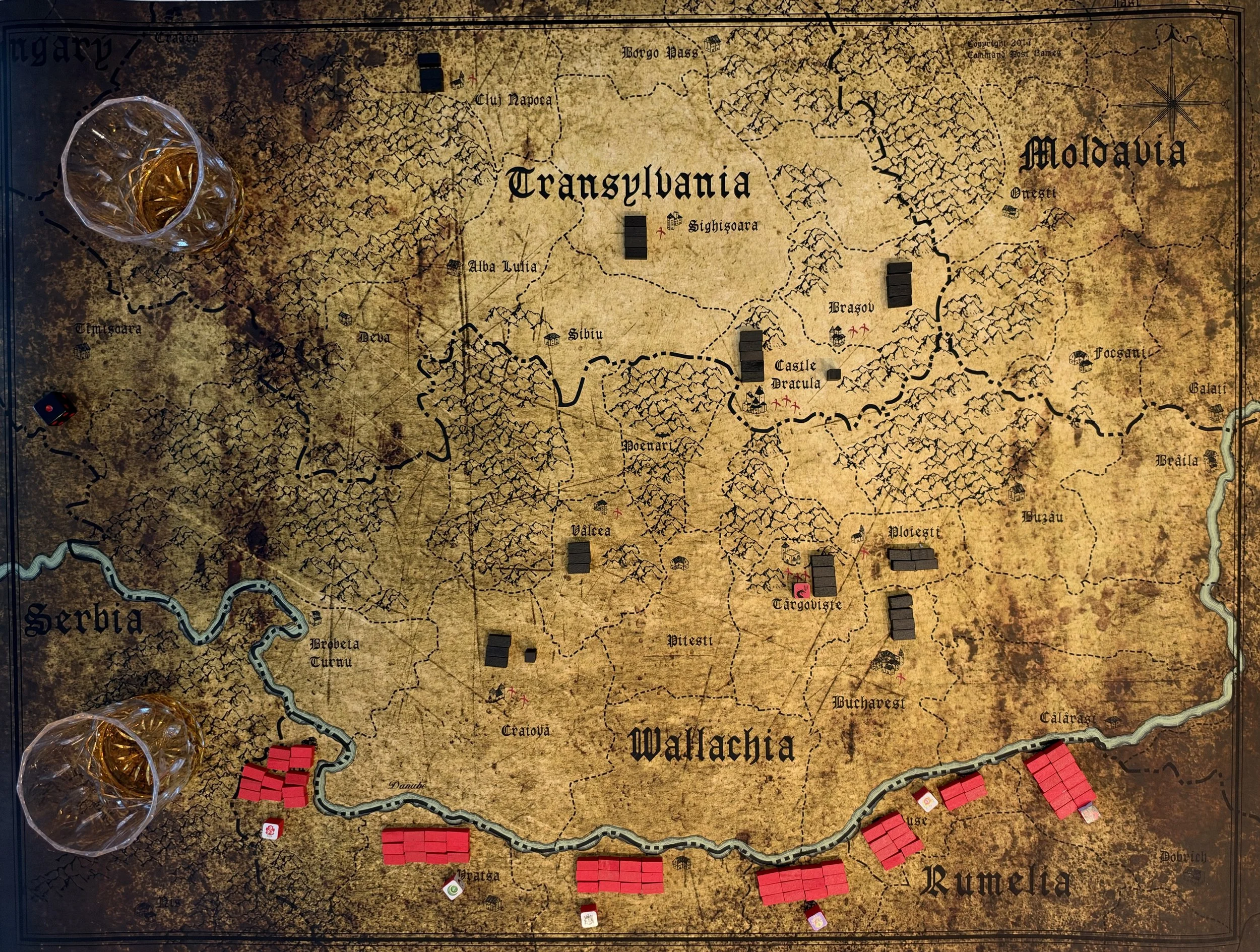
This whisky is made for this map’s incredible aesthetic. Photo © 2026 WargamesandWhisky.com
Wallachia, 1462: Night has fallen, and the air is still. Clouds obscure the moon as a thick fog rolls down off the mountains. Just then, the clouds shift and pale beams of light illuminate the tree-lined road ahead…only, they aren’t trees, not really - this is the Forest of the Impaled and Vlad Dracula is about to make his final stand against the Ottoman Sultan. Vastly outnumbered and facing betrayal from his own brother Radu the Fair, Dracula gives the order to impale prisoners and his countrymen alike as a terrifying welcome sign for the Ottoman invaders, a macabre reminder of his cruelty and desperation. (Note: we earn a small commission from our affiliate links at no additional cost to you.)
Gameplay in Forest of the Impaled reflects the vast disparity of the combatants, pitting one player as Vlad the Impaler against up to six different Ottoman generals. Dracula historically knew the odds were impossibly against him, and players must do as the historical figure did: hide in the mountains, conduct hit-and-run strikes, impale enemy casualties as horrific deterrents, and live off the land by conscripting soldiers from the people of Transylvania and Wallachia in the face of seemingly endless enemies. If Dracula still controls one castle in each region, he wins; if the Ottomans control all 8 castles, they are victorious.
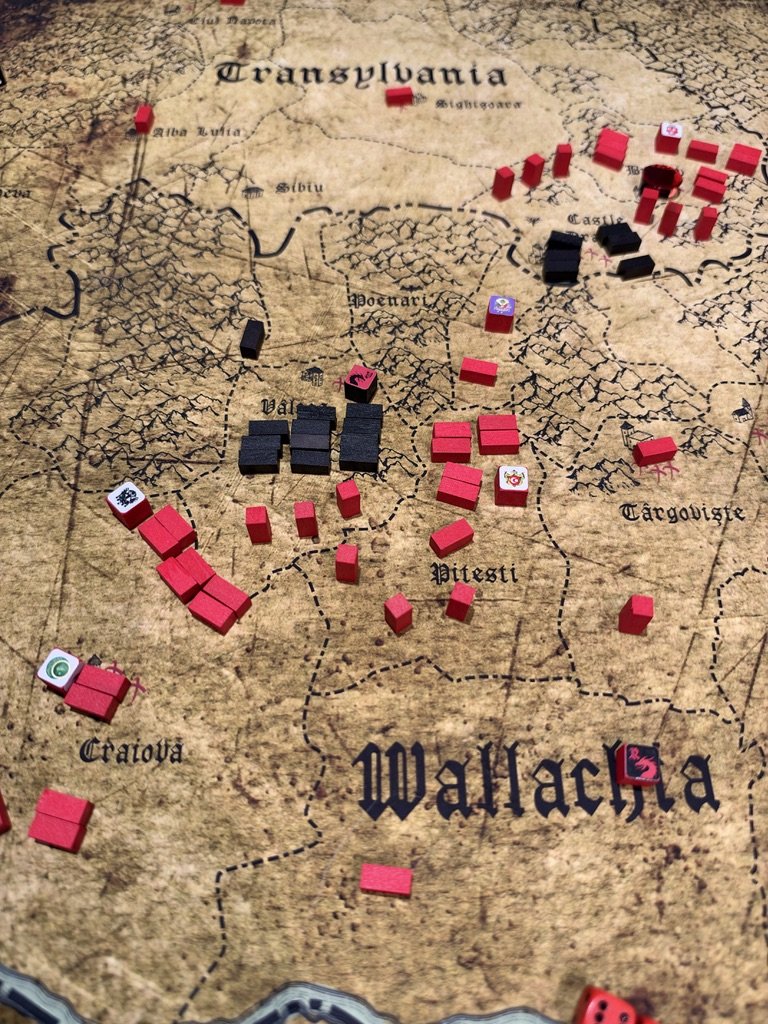
Dracula holds out to the end of round 4, safe behind a wall of the impaled. Photo © 2026 WargamesandWhisky.com
The rules behind all of this are as simple and inviting as you’ll find in a wargame, especially one that still communicates its history in an informed and thoughtful manner without sacrificing the fun - or the knowing winks to the literary Dracula. With only about five pages of rules, Forest of the Impaled is laser focused on three aspects of the military conflict: open field engagements, castle sieges, and operational movement.
Combat is a straightforward dice-throwing affair, but the fog of war and operational realities of 15th century warfare are captured by a unique system in which armies must actively search to find their enemy and join battle; they can’t simply march across a map border and assume they’ll find their prey. The skill of the generals involved is also critical, as armies must leverage a general’s command rating in order to find the enemy. Although executed as another simple die roll, this mechanic nevertheless imparts another great asymmetry in the campaign to oust Vlad the Impaler - Dracula is a much, much better general than what the Sultan’s armies have to offer. This creates many tense, memorable, and sometimes outright gleeful situations in which Dracula’s otherwise vastly outnumbered troops are able to cohesively seek and destroy their foe, picking the Ottomans apart one by one before many of their troops even find where the battle is happening! The operational competency of Ottoman generals gets another fun mechanical twist if playing with more than two players: each additional player controls a specific Ottoman general…but they are forbidden from communicating with other Ottoman players unless they share the same spot on the map.
Dracula’s signature impalements also play a critical part in military affairs, forcing Ottoman armies to succeed on morale checks or be forced to retreat from territories where Dracula has left behind his bloody calling card. In a game with only 4 total rounds, any retreats are costly to the Ottoman victory condition.
We would be remiss if we didn’t pause to mention the cool as hell aesthetics of this game. Wooden kriegsspiele-style blocks lined up across a period-invoking canvas map of Transylvania and Wallachia: laying flat to represent formations of troops, standing upright to represent the thousands impaled at Dracula’s command. If you’ve wanted to try a traditional, historical wargame but were chilled by the technical manuals masquerading as rulebooks, Forest of the Impaled is a great and deeply thematic place to start.
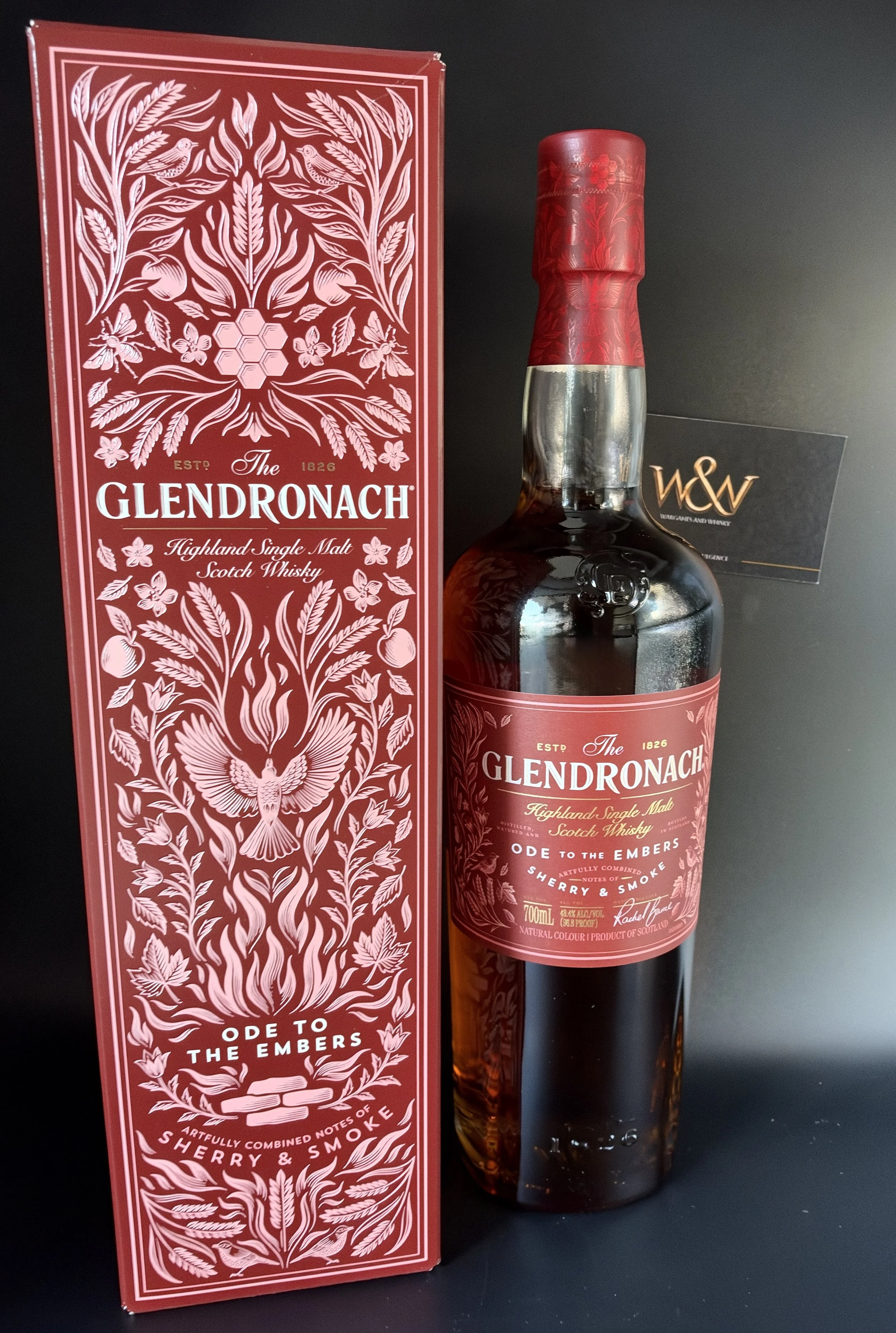
This a game of survival- an ode to the [surviving] embers. Photo © 2026 WargamesandWhisky.com
As you chase Dracula through Wallachia and Transylvania, or slip past the Ottoman armies, savor a deep amber dram of The Glendronach Ode to the Embers. This whisky is full bodied, deep, and complex, enticing you with a lightly smoldering peat smoke nose, a rarity for this Highlands distillery, which was founded in 1826 as one of the first legal distilleries under the Excise Act of 1823. Ode to the Embers is part of The Glendronach Anthology series, under the steady hand of master blender Dr. Rachel Barrie, one of the first female master blenders in Scotland. Despite the lack of age statement, this is a whisky for a sophisticated palette- a mix of sweet and savory notes that circle one another, like the forces on the board, shifting from deep honey to fragrant spice, and rich fruits. After all, Glendronach means the valley of the blackberries… their flavors hiding among the forests of the impaled.